Table of Contents
ToggleDesigning a bedroom for two kids isn’t just about cramming two beds into one room. It’s about creating a functional, organized space where each child has their own territory while sharing common ground. Whether you’re dealing with a tight 10×12 room or a more generous 12×14 space, smart planning makes the difference between constant conflicts and a room that actually works. This guide walks through the practical decisions, layout, storage, zoning, and finishes, that turn a shared bedroom into a space both kids can live with.
Key Takeaways
- Effective 2 kids bedroom design requires intentional planning with clear zones, adequate storage, and smart furniture placement to transform shared space into a functional home for both children.
- Bed configuration—whether parallel, bunk, or lofted—should match the room’s dimensions and floor-traffic needs; bunk beds require 8-foot ceilings and are safest for children over six.
- Creating individual zones through visual dividers like bookcases and color-coded accents reduces conflict while maintaining a cohesive room design that feels purposeful rather than cramped.
- Vertical storage solutions and under-bed organizers maximize space in shared bedrooms, while labeled bins and multi-function furniture help manage twice the toys, clothes, and supplies.
- Neutral wall colors paired with accent walls or themed decor specific to each child provides flexibility as tastes evolve and prevents the room from feeling outdated or limiting.
- Reassess storage and layout every six months as kids grow, purging unused items and adjusting zones to adapt the bedroom to changing needs and interests.
Why Shared Bedrooms Are a Smart Choice for Growing Families
Shared bedrooms solve real problems. They free up square footage for a home office, playroom, or guest space. They teach kids to negotiate, share, and respect boundaries, skills that don’t come from a textbook.
From a structural standpoint, most homes have limited bedrooms. Adding a bedroom means permits, framing, electrical work, and HVAC adjustments. Converting existing space is expensive and disruptive. A well-designed shared room costs a fraction and delivers immediate results.
Shared rooms also simplify routines. One bedtime, one cleanup zone, one place to corral toys and clothes. Parents spend less time bouncing between rooms. Kids often sleep better with a sibling nearby, especially younger ones who find comfort in company.
The key is intentional design. A shared room shouldn’t feel like a compromise. It should feel like a space designed for two people, with clear zones, adequate storage, and room to grow as the kids age.
Layout and Space Planning Essentials
Start with the room’s dimensions and door swing. Measure wall-to-wall, accounting for baseboards and any oddities like radiators or angled ceilings. Most kids’ rooms fall between 100 and 180 square feet. That’s workable, but every inch counts.
Traffic flow matters. Leave at least 24 inches of clearance between furniture and 30 to 36 inches in front of the closet. Kids need room to move without tripping over bed frames or toy bins. Map out pathways before placing furniture.
Window placement affects bed arrangement. Avoid positioning beds directly under windows, it complicates blinds, creates temperature swings, and limits wall space for headboards or shelving. If the window is on a long wall, center beds on either side. If it’s on a short wall, flank it with desks or dressers instead.
Electrical outlets dictate lamp and device placement. Count existing outlets and add power strips where needed, but don’t daisy-chain them, it’s a fire hazard. If the room needs rewiring for symmetrical lighting or charging stations, hire a licensed electrician. Most jurisdictions require permits for new circuits.
Choosing the Right Bed Configuration
Bed arrangement defines the room. Three common configurations work for most layouts:
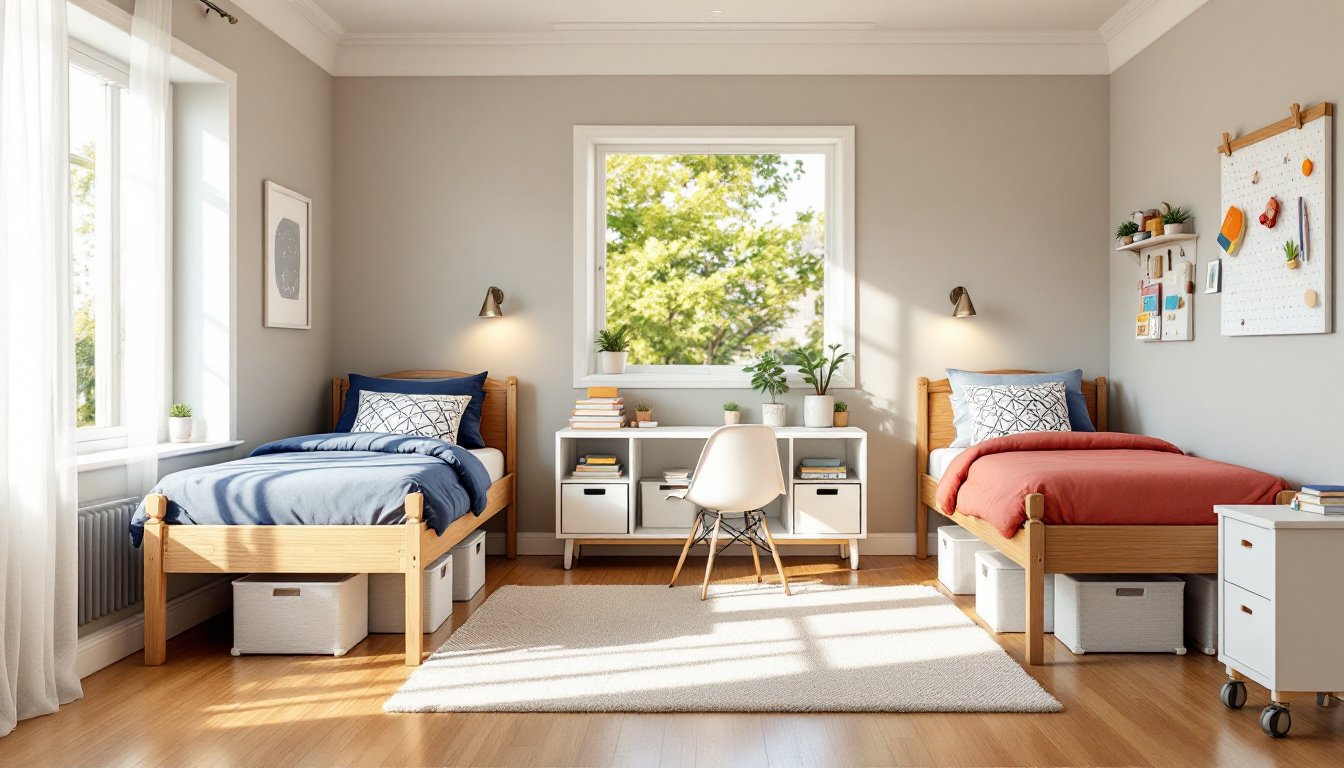
Parallel beds: Place twin beds along opposite walls or the same wall, head-to-head or foot-to-foot. This setup works well in rectangular rooms and gives each child a clear side of the room. Use a nightstand or small bookshelf as a divider if beds share a wall.
Bunk beds: Vertical stacking saves floor space, leaving room for desks, play areas, or storage. Standard bunk beds require at least 8-foot ceilings (check local building codes). Top bunks need guardrails on all open sides, non-negotiable for safety. Ensure the ladder is secure and positioned where kids won’t bang into it during the night. Bunk beds work best for kids over six: younger children lack the coordination for safe ladder use. You’ll find creative bunk bed arrangements that maximize both sleep and play space in smaller footprints.
L-shaped or lofted beds: Loft beds elevate one mattress, creating desk or storage space underneath. L-shaped configurations place beds perpendicular in a corner, freeing up the center. Both options suit kids with different schedules (early riser vs. night owl) since they minimize disturbance.
Standard twin beds measure 38×75 inches: twin XLs are 38×80 inches. Account for mattress thickness (8 to 12 inches) when measuring clearance under lofts. Leave at least 33 inches between the mattress top and ceiling for sitting upright.
Creating Individual Zones Within a Shared Room
Dividing the room into personal zones reduces conflict. Each child needs a designated sleep area, storage, and a small territory they control.
Visual dividers establish boundaries without walls. Bookcases, curtains, or freestanding panels work well. A 36-inch bookshelf placed perpendicular to the wall creates a physical separation while providing storage on both sides. Tension-rod curtains offer privacy and can be pulled back during the day. Avoid heavy, floor-to-ceiling dividers, they block light and make the room feel cramped.
Color coding personalizes zones. Assign each child a bedding color, wall accent, or rug. This doesn’t mean painting half the room pink and half blue (unless that’s the goal). Subtle touches, throw pillows, lamp shades, wall art, distinguish spaces without clashing.
Individual lighting gives each kid control over their area. Install wall-mounted reading lamps or clip-on task lights instead of relying on a single overhead fixture. Dimmer switches help, but separate light sources let one child read while the other sleeps.
Desks or workspaces need dedicated zones. If space allows, place a small desk (24 to 30 inches wide) in each child’s area. Wall-mounted fold-down desks save floor space. If only one desk fits, schedule usage or set up a secondary workspace elsewhere in the house.
Define zones early and stick to them. Boundaries prevent territorial disputes and give kids a sense of ownership in a shared environment.
Storage Solutions That Maximize Space
Shared rooms accumulate twice the stuff: clothes, toys, books, sports gear, school supplies. Without smart storage, clutter takes over.
Under-bed storage captures dead space. Rolling bins or drawers slide under beds (measure clearance first, platform beds and low-profile frames don’t leave much room). Store off-season clothes, extra bedding, or bulky toys here.
Vertical storage moves items off the floor. Wall-mounted shelves, pegboards, and hooks use space kids can’t trip over. Install shelves at reachable heights (30 to 48 inches for younger kids, up to 60 inches for older ones). Use studs or heavy-duty anchors rated for the load, drywall alone won’t support a shelf full of books.
Closet organizers double capacity. Add a second hanging rod at kid height (40 to 48 inches) for everyday clothes. Use the upper rod (60 to 72 inches) for out-of-season items or adult-access storage. Shelf dividers keep folded clothes from toppling. Hanging organizers with cubbies work for shoes, accessories, or small toys.
Multi-function furniture earns its footprint. Beds with built-in drawers, benches with lift-up lids, or ottomans that open for storage reduce the need for extra pieces. If you’re handy, platforms like Ana White offer free plans for DIY storage beds, cube organizers, and modular shelving that you can customize to fit the room.
Labeled bins and baskets keep categories separate. Use clear bins for visibility or opaque ones for a cleaner look. Labels (words or pictures) help younger kids return items to the right spot.
Storage isn’t one-and-done. Reassess every six months as kids grow and interests change. Purge unused items to prevent overflow.
Color Schemes and Decor for Two Kids
Choosing colors and finishes for a shared room requires compromise. The goal is cohesion without forcing both kids into one aesthetic.
Neutral bases provide flexibility. Paint walls in soft gray, beige, greige, or off-white. Neutrals work with any accent color and won’t clash as tastes change. One gallon of quality paint covers roughly 350 to 400 square feet with one coat: most kids’ rooms need one to two gallons depending on surface texture and color change.
If kids want different colors, use an accent wall approach. Paint one wall (or a section) for each child, keeping the rest neutral. Alternatively, apply peel-and-stick wallpaper or decals, they’re removable and less permanent than paint.
Coordinating, not matching accents keep the room from looking like a hotel. Choose a shared theme, animals, space, nature, sports, and let each child pick their favorite within that category. Or go thematic-free and link colors through a common palette: navy and yellow, coral and teal, green and gray.
Textiles tie the room together. Use similar styles for bedding (same pattern, different colors: same color, different patterns). Area rugs define zones and muffle noise. Make sure rugs have non-slip pads underneath, kids move fast and slippery floors cause falls.
Wall decor personalizes without permanence. Framed art, posters, or cork boards let kids display their interests. Command strips or poster putty avoid wall damage. Keep arrangements at eye level (40 to 50 inches for kids). For inspiration on cohesive looks that balance multiple personalities, browse galleries on homify for real-world shared bedroom setups.
Flooring choices affect acoustics and maintenance. Carpet is soft and warm but shows stains. Hard flooring (laminate, vinyl plank, engineered hardwood) cleans easily and handles spills, but it’s louder. Add rugs for comfort if you go the hard-floor route.
Avoid overly trendy themes. A spaceship mural is exciting at six, embarrassing at twelve. Stick with adaptable decor that evolves with the kids.
Conclusion
A well-designed shared bedroom isn’t about making do with less space, it’s about designing with intention. Thoughtful layout, clear zones, and smart storage transform a cramped room into a functional home for two kids. Measure carefully, plan for growth, and involve the kids in decisions where it makes sense. The result is a room that works today and adapts as they grow.