Table of Contents
ToggleA back patio is more than a few pavers and a grill. It’s the transition zone between indoor comfort and outdoor air, a place where you eat breakfast, watch thunderstorms roll in, and argue over whose turn it is to bring the dishes inside. A well-designed patio extends living space without adding square footage to the mortgage, but it only works if the layout, materials, and furnishings match how you actually use the space. This guide walks through the decisions that matter: purpose, foundation, shade, seating, lighting, and finishing details that pull it all together.
Key Takeaways
- Define your patio’s purpose and layout before purchasing materials—dining areas require 10×12 feet minimum, while entertaining zones may need 16×20 feet or more, and always slope surfaces away from the house at 1/4 inch per foot for drainage.
- Choose your back patio design foundation wisely: concrete pavers offer DIY-friendly modularity with dry-lay installation, while poured concrete provides a modern look at lower cost, and natural stone delivers elegance but requires skilled masonry work.
- Overhead structures like pergolas, shade sails, and retractable canopies reduce heat and define zones, with pergolas requiring posts set below the frost line and electrical integration best planned during initial construction.
- Select weather-resistant furniture materials such as powder-coated aluminum or steel frames, UV-stabilized resin wicker, or naturally rot-resistant teak and acacia to minimize maintenance and extend furniture lifespan.
- Layer your outdoor lighting with string lights for ambiance, low-voltage LED path lights for safety, and ceiling fans or accent uplighting to create functionality and visual depth that extends patio use into evening hours.
- Integrate plants, privacy screens, and finishing details like outdoor rugs and planters to soften hard edges, define seating zones, and personalize your back patio design without overcrowding the space.
Define Your Patio Purpose and Layout
Before ordering materials or shopping furniture, determine how the patio will be used. A morning coffee nook needs 6 feet by 8 feet at most. A dining area for six requires at least 10 feet by 12 feet to fit a table, chairs, and walking space. Entertaining zones with seating clusters, a fire pit, and a grill can quickly push past 16 feet by 20 feet.
Measure the yard and sketch the footprint to scale. Account for door swings, grade changes, and drainage patterns. Patios should slope away from the house at a minimum 1/4 inch per foot to prevent water from pooling against the foundation. If the yard slopes significantly, you may need retaining walls or a stepped design, both of which can require grading permits depending on height and soil type.
Consider sun exposure throughout the day. A west-facing patio bakes in afternoon heat: an east-facing space gets pleasant morning light. This affects furniture material choices and whether overhead shade structures are necessary. Proximity to the kitchen matters for dining setups. Running electrical or gas lines for lighting, outlets, or a built-in grill is easier during initial construction than retrofitting later.
Zoning codes often regulate patio placement relative to property lines and easements. Check setback requirements before digging or pouring. If the patio abuts the house and exceeds a certain square footage, some jurisdictions classify it as an addition and require permits.
Flooring and Foundation Options for Lasting Style
Patio flooring carries the design visually and structurally. The base needs to handle freeze-thaw cycles, drainage, and foot traffic without cracking or shifting. Most DIY-friendly options sit on a compacted gravel base topped with sand or screenings, though poured concrete requires forming and finishing skills.
Pavers, Concrete, and Natural Stone Choices
Concrete pavers are the most forgiving for beginners. They come in modular sizes (common dimensions: 12×12, 16×16, or rectangular formats like 6×9 inches) and can be laid in running bond, herringbone, or basketweave patterns. Dry-lay installation over 4 to 6 inches of compacted gravel and 1 inch of leveling sand allows for adjustment and easy repairs. Polymeric sand swept into joints hardens when wet, locking pavers in place and resisting weed growth. Expect coverage of roughly 1.15 square feet per paver for a 12×12 unit, accounting for joint spacing.
Poured concrete offers a seamless, modern look and costs less per square foot than pavers if you DIY the forming and finishing. Standard 4-inch thickness works for foot traffic: add wire mesh or rebar for crack resistance. Finishing options include broom, trowel-smooth, or stamped patterns that mimic stone. Concrete requires control joints every 8 to 10 feet to manage cracking as it cures. Staining or sealing adds color and weather protection but needs reapplication every few years.
Flagstone and natural stone bring irregular shapes and earthy tones but cost more and require skill to fit tightly. Dry-laid flagstone on a sand base shifts over time: mortaring over a concrete slab provides stability but turns the project into masonry work. Bluestone, limestone, and sandstone are popular choices, each with different slip resistance when wet. Natural stone also absorbs stains from grease, wine, and tannins, so plan to seal it annually.
Gravel patios are budget-friendly and excellent for drainage. Use 3/8-inch pea gravel or crushed stone over landscape fabric and an edging material like steel or pressure-treated timber to contain the rocks. Gravel shifts underfoot and isn’t ideal for table legs or rolling carts, but it pairs well with outdoor living spaces that embrace a relaxed, garden-forward aesthetic.
All patio surfaces benefit from proper base prep. Excavate 6 to 8 inches, compact the soil, add gravel in 2-inch lifts with compaction between layers, then top with sand or set the surface material. Skipping compaction leads to settling and uneven surfaces within a season.
Creating Shade and Comfort with Overhead Structures
Unshaded patios turn into solar ovens by midday. Overhead structures provide relief, define zones, and add vertical interest. The trade-off is cost, maintenance, and whether the structure needs engineered footings or ties into the house.
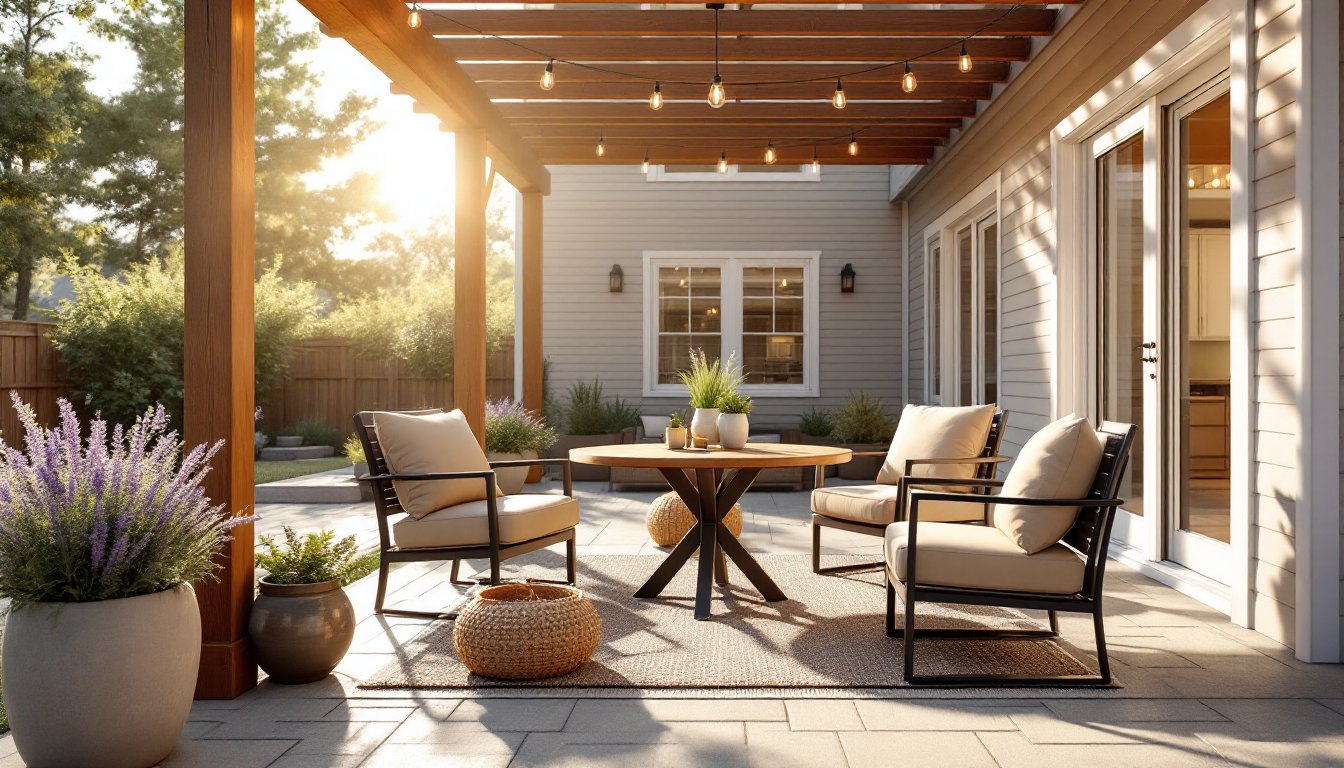
Pergolas offer partial shade through slatted beams. Standard designs use 4×4 or 6×6 posts set in concrete footings below the frost line (check local frost depth, often 24 to 48 inches in northern climates). Rafters typically span 2×6 or 2×8 lumber on 16- or 24-inch centers. Pergolas attached to the house require a ledger board lag-bolted into wall studs or rim joists, which can affect siding and flashing details. If the patio is new construction, coordinate pergola footings with paver or concrete layout to avoid conflicts.
Retractable fabric canopies or shade sails add flexibility. Canopies mount to pergola beams or independent posts and retract when wind picks up. Shade sails (triangle or square) tension between anchor points and provide modern lines with UV protection. Both require solid anchor points, 4×4 posts in concrete or heavy-duty eye bolts into structural framing.
Solid-roof structures like pavilions or attached covered patios keep rain off and require more permitting. These are structural additions with rafters, sheathing, shingles, and gutters. Span tables and local codes dictate beam sizing based on snow load and span. Solid roofs also block natural light, which may darken adjacent interior rooms.
For rental-friendly or temporary shade, large cantilever umbrellas with weighted bases work well. Look for bases rated at 75 to 100 pounds for stability in wind. Umbrellas tilt and rotate but require seasonal storage and don’t define space the way a pergola does.
Consider integrating overhead lighting, fans, or speakers during construction. Running electrical conduit through posts before setting them in concrete is simpler than surface-mounting wiring later.
Furniture and Seating Arrangements That Invite Relaxation
Patio furniture lives outside in sun, rain, and pollen. Choose materials that handle weather without constant maintenance. Seating arrangements should encourage conversation or accommodate specific activities like dining, reading, or lounging.
Aluminum and powder-coated steel frames resist rust and support cushions well. Aluminum is lighter and easier to move: steel is heavier and more stable in wind. Both need UV-resistant cushions with quick-dry foam cores and solution-dyed acrylic covers (common brands include Sunbrella-type fabrics). Cushions still mildew if left damp, so plan storage or invest in weatherproof bins.
Teak, eucalyptus, and acacia are popular hardwoods that weather to silver-gray if left untreated. Teak contains natural oils that resist rot, but it’s expensive. Acacia offers similar looks at lower cost but needs annual sealing. Avoid softwoods like pine unless pressure-treated and sealed, they splinter and warp quickly outdoors.
Resin wicker over metal frames mimics natural wicker without the rot. Quality varies widely: check that the weave is tight and UV-stabilized to prevent cracking. Cheap resin furniture fades and becomes brittle within two seasons.
For dining setups, allow 24 to 30 inches of table depth per person and at least 36 inches of clearance around the table for chairs to pull out. A 60-inch round table seats six comfortably. Rectangular tables fit narrow patios better but require more linear space.
Conversation areas benefit from sectional seating or a mix of deep chairs and a coffee table. Arrange seating in a U-shape or around a fire pit to encourage eye contact. Homeowners planning seasonal outdoor decor updates often rotate cushion colors or add outdoor rugs to refresh the look without replacing furniture.
Built-in benches save space and provide storage underneath. Frame them with 2×4 or 2×6 lumber treated for ground contact, add a hinged seat top, and line the interior to keep cushions dry. Built-ins work well along patio edges or as part of a retaining wall.
Lighting and Ambiance for Day-to-Night Enjoyment
Outdoor lighting extends usability after dark and adds safety along steps and edges. Layer task, ambient, and accent lighting for flexibility. Code-compliant wiring requires GFCI-protected outlets and weatherproof boxes: low-voltage systems (12V or 24V) are easier for DIYers and don’t require conduit burial in many areas, though local electrical codes vary.
String lights are the fastest way to add ambiance. Use outdoor-rated strands with Edison-style LED bulbs for warm light and low energy draw. Suspend cables between posts, pergola beams, or eye hooks mounted into fascia boards. Tension cables properly to prevent sagging: use galvanized steel cable with turnbuckles for long spans.
Recessed deck lights or step lights illuminate edges and stairs. Low-voltage LED puck lights mount flush into posts or risers and run off a transformer plugged into a GFCI outlet. Plan wire runs during construction, retrofitting means fishing wire through tight spaces.
Path and landscape lighting highlights plantings and defines walkways. Stake-mounted LED path lights on 12V systems space every 6 to 8 feet along borders. Uplighting trees or architectural features with adjustable bullet fixtures adds depth. Use timers or photocell sensors to automate on/off cycles.
Ceiling fans with lights integrate into pergolas or covered patios and require electrical boxes rated for fan weight and movement. Install a fan-rated box anchored to structural framing, not just drywall or thin ceiling panels. Wet-rated or damp-rated fans are necessary depending on exposure to rain.
Fire features, whether a propane fire table, wood-burning fire pit, or chiminea, add focal-point lighting and warmth. Propane models require ventilated storage for tanks and clearance from combustibles. Wood-burning pits need spark screens and should sit on non-combustible surfaces. Check local ordinances: some municipalities restrict open flames during fire season or within certain distances of structures.
Adding Greenery, Privacy, and Finishing Touches
Plants soften hard edges, provide privacy, and tie the patio into the surrounding landscape. Strategic greenery blocks sightlines from neighbors and reduces wind.
Container gardens offer flexibility without in-ground planting. Use large pots (16 to 24 inches diameter minimum) to prevent roots from drying out quickly. Glazed ceramic, fiberglass, or resin planters hold moisture better than terracotta. Group containers in odd numbers for visual interest and vary heights with plant stands or stacked pots.
Choose plants suited to sun exposure and container life. Ornamental grasses, lavender, and succulents tolerate full sun and dry spells. Ferns, hostas, and coral bells prefer shade and consistent moisture. For vertical interest, grow climbing vines like clematis or jasmine on trellises anchored to patio posts.
Privacy screens include lattice panels, slatted fences, or living walls. Lattice mounted between 4×4 posts provides a framework for vines and partial screening. Horizontal slat fencing using 1×4 or 1×6 boards spaced 1 to 3 inches apart offers modern lines and adjustable privacy. Living walls, vertical planters or espalier fruit trees, take time to fill in but add lush texture.
Tall planters with bamboo or evergreen shrubs create portable privacy. Clumping bamboo (not running varieties, which spread aggressively) grows quickly and reaches 6 to 12 feet depending on species. Arborvitae, boxwood, or holly in large containers stay evergreen year-round in many climates.
Outdoor rugs define seating zones and add color. Use polypropylene rugs designed for outdoor use, they resist mold, fade, and hose clean. Anchor rugs with furniture legs or rug pads to prevent shifting.
Finishing details matter. Planters, throw pillows, lanterns, and outdoor art personalize the space. Avoid clutter, choose a few statement pieces rather than scattering small decor. Seasonal rotation keeps the patio fresh without constant spending. For more ideas on integrating materials for hardscape projects, research options that balance durability with aesthetic goals.
Maintenance keeps the patio functional. Sweep pavers regularly to prevent sand loss. Seal natural stone and wood annually. Check pergola hardware for rust and tighten bolts each spring. Drain and cover water features before freezing weather. Store cushions indoors or in weatherproof bins during off-season months.