Table of Contents
ToggleA luxury walk-in closet isn’t just storage, it’s a private dressing suite where organization meets high-end design. Whether you’re converting a spare bedroom or building from scratch, the difference between a basic closet and a luxury space comes down to deliberate choices in layout, materials, and functionality. This guide walks through the practical elements that define true luxury: custom storage systems, strategic lighting, premium finishes, and integrated technology. Expect straight talk on what’s worth the investment and where you can achieve high-end results without contractor-level budgets.
Key Takeaways
- A luxury walk-in closet design requires minimum 6 feet by 6 feet of floor space with strategic zoning for hanging clothes, folded items, shoes, and accessories to separate thoughtful design from cramped layouts.
- Invest in custom storage solutions with adjustable shelving using 32mm hole spacing, full-extension ball-bearing drawer glides, and solid metal hanging rods to ensure durability and flexibility as your wardrobe evolves.
- Layer multiple light sources including LED strip lighting at 3000K color temperature under shelves, recessed downlights spaced 3-4 feet apart, and dimmers to create both functional and ambient lighting without shadows.
- Choose durable materials strategically: ¾-inch hardwood plywood carcasses over particleboard, quartz countertops for islands, and quality hardware ($8-15 per pull) that gets touched daily and must withstand long-term use.
- Incorporate functional seating with built-in benches (15-18 inches deep) and center islands (minimum 4 feet by 3 feet) that provide storage and display surfaces while maintaining comfortable traffic flow with at least 3 feet of clearance.
- Integrate smart technology thoughtfully, such as motion-sensor lighting and motorized rods for high storage, but prioritize core functionality in luxury walk-in closet design before adding convenience features that require electrical work.
Key Elements That Define Luxury Walk-In Closet Design
Luxury walk-in closets share specific characteristics that separate them from standard reach-ins or basic walk-ins. Understanding these foundational elements helps prioritize where to invest effort and budget.
Space planning comes first. A true luxury walk-in requires minimum 6 feet by 6 feet of floor space, though 8 feet by 10 feet or larger allows for center islands and seating. Smaller footprints can still feel luxurious with floor-to-ceiling organization and careful material selection.
Ceiling height matters more than most homeowners realize. Standard 8-foot ceilings work, but 9- to 10-foot ceilings enable upper storage without requiring a step stool for everyday items. If converting existing space, don’t assume you need to vault the ceiling, vertical storage systems maximize height regardless.
Zoning is what separates thoughtful design from cramped chaos. Divide the space into dedicated zones: hanging clothes (short and long), folded items, shoes, accessories, and a dressing area. Top designers incorporate zones for specific garment types, bags, and even seasonal rotation storage.
Consider traffic flow during layout. A center island looks stunning but requires at least 3 feet of clearance on all sides for comfortable movement. In narrower rooms, stick with perimeter cabinetry and a seating nook rather than forcing an island that creates bottlenecks.
Many luxury home features incorporate similar space-planning principles, focusing on purposeful zones rather than cramming in extras.
Custom Storage Solutions for Maximum Functionality
Off-the-shelf closet systems have come far, but custom solutions deliver the precise fit and flexibility luxury spaces demand. Here’s where to focus.
Adjustable shelving beats fixed shelves every time. Use systems with 32mm hole spacing (European standard) or similar adjustability so shelf heights adapt as wardrobe needs change. Melamine-coated particleboard works for most applications, but upgrade to plywood with hardwood veneer for shelves holding heavy sweaters or shoes, they won’t sag over time.
Double-hang rods maximize vertical space for shirts, jackets, and pants. Install the top rod at 80-84 inches and the lower at 40-42 inches. Use solid metal rods (1¼-inch diameter minimum) to prevent bowing, especially for spans over 4 feet. Consider velvet-coated hangers for delicate fabrics, they’re not just aesthetic, they actually prevent slipping.
Drawer systems need full-extension ball-bearing glides rated for at least 75-100 pounds. Cheap drawer slides fail within a year under the weight of denim and knitwear. Soft-close mechanisms add luxury and prevent slamming, which can loosen joinery over time.
Shoe storage options include angled shelves (easier to see pairs), pull-out racks, and cubbies. Allow 7-8 inches of width per pair for men’s shoes, 6-7 inches for women’s. Clear acrylic or backlit displays work for high-end footwear: simple melamine shelves suffice for everyday pairs.
Specialty storage separates true custom work from modular kits: pull-out valet rods, belt and tie racks, jewelry drawers with velvet-lined compartments, and pull-down hanging rods for high storage. Don’t install features you won’t use, talk to anyone with a pants rack they’ve used exactly twice.
Lighting Strategies to Elevate Your Closet Ambiance
Poor lighting turns even the best closet into a guessing game at 6 AM. Luxury closets layer multiple light sources for function and mood.
LED strip lighting works as task lighting under shelves and inside cabinets. Choose color temperature carefully: 3000K (warm white) flatters skin tones for dressing, while 4000K (neutral white) renders clothing colors more accurately. Install strips along the front edge of shelves, not the back, this eliminates shadows on clothing.
Recessed downlights provide ambient lighting. Space them 3-4 feet apart and avoid placing directly over where you’ll stand to dress (creates unflattering shadows). If the closet shares ceiling joists with rooms above, confirm clearance for recessed cans, IC-rated housings are required if insulation is present.
Chandelier or pendant fixtures add visual drama but require proportional sizing. In a 10-by-12-foot closet, a fixture 20-24 inches in diameter feels balanced. Smaller spaces risk looking cluttered with oversized fixtures. Mount 7 feet minimum above finished floor to prevent head strikes.
Trends like crystal chandeliers in luxury closets certainly deliver visual impact, though they require routine cleaning in dusty closet environments.
Dimmer switches give control over ambiance. Install LED-compatible dimmers, standard incandescent dimmers cause LED flicker and premature failure. For closets over 100 square feet, consider separate controls for task and ambient circuits.
Natural light from windows or skylights ranks highest for color accuracy but requires UV-filtering treatments to protect fabrics. If adding a window, factor in privacy (ground-floor closets need obscured glass) and climate control, southern exposures in hot climates add cooling load.
Premium Materials and Finishes Worth the Investment
Material choices impact both aesthetics and longevity. Know where to splurge and where to save.
Cabinet construction: Plywood carcasses outlast particleboard and hold fasteners better for long-term adjustments. ¾-inch hardwood plywood adds cost but eliminates sagging and failed screw holes. Melamine-coated interiors simplify cleaning and look cleaner than raw wood.
Door and drawer fronts create the visual impact. Solid wood (maple, oak, cherry) allows custom staining and has genuine heft. MDF with paint-grade finish costs less and provides perfectly smooth surfaces for lacquer or high-gloss paint. Avoid thin veneer over particleboard, it chips easily at edges.
Countertops on islands or dressing tables see daily use. Quartz resists stains and scratches without sealing, though it adds weight that requires structural support (consult load tables if installing over existing flooring). Butcher block adds warmth but needs periodic oiling. Marble looks luxurious but stains from cosmetics and perfume, realistic maintenance expectations matter.
Flooring should be durable and feel good underfoot. Engineered hardwood handles climate fluctuations better than solid wood in conditioned spaces. Luxury vinyl plank (LVP) has improved dramatically, 8mm+ thickness with cork or foam underlayment feels substantial underfoot. Carpet adds comfort but traps dust and limits moisture if steam-pressing clothes.
Examples of elegant millwork in walk-in closets demonstrate how quality trim and crown molding elevate even simple cabinet boxes.
Hardware gets touched daily. Solid brass, stainless steel, or quality zinc alloy pulls hold up: hollow lightweight hardware feels cheap immediately. Budget $8-15 per pull for quality that lasts.
Incorporating Seating and Display Features
Functional seating and display elements add the “dressing room” feel that defines luxury closets.
Benches or ottomans provide a place to sit while putting on shoes. Built-in benches work in larger closets: 15-18 inches deep and 18 inches high suits most adults. Add storage underneath using lift-top hinges or pull-out drawers. Freestanding upholstered ottomans offer flexibility but require floor space, 24-inch square ottomans fit most layouts without crowding.
Upholstery needs to handle daily contact. Performance fabrics (Crypton, Sunbrella) resist stains better than natural fibers. Leather or faux leather wipe clean but can feel cold. Velvet looks luxurious but shows wear in high-contact areas, save it for accent pillows rather than primary seating.
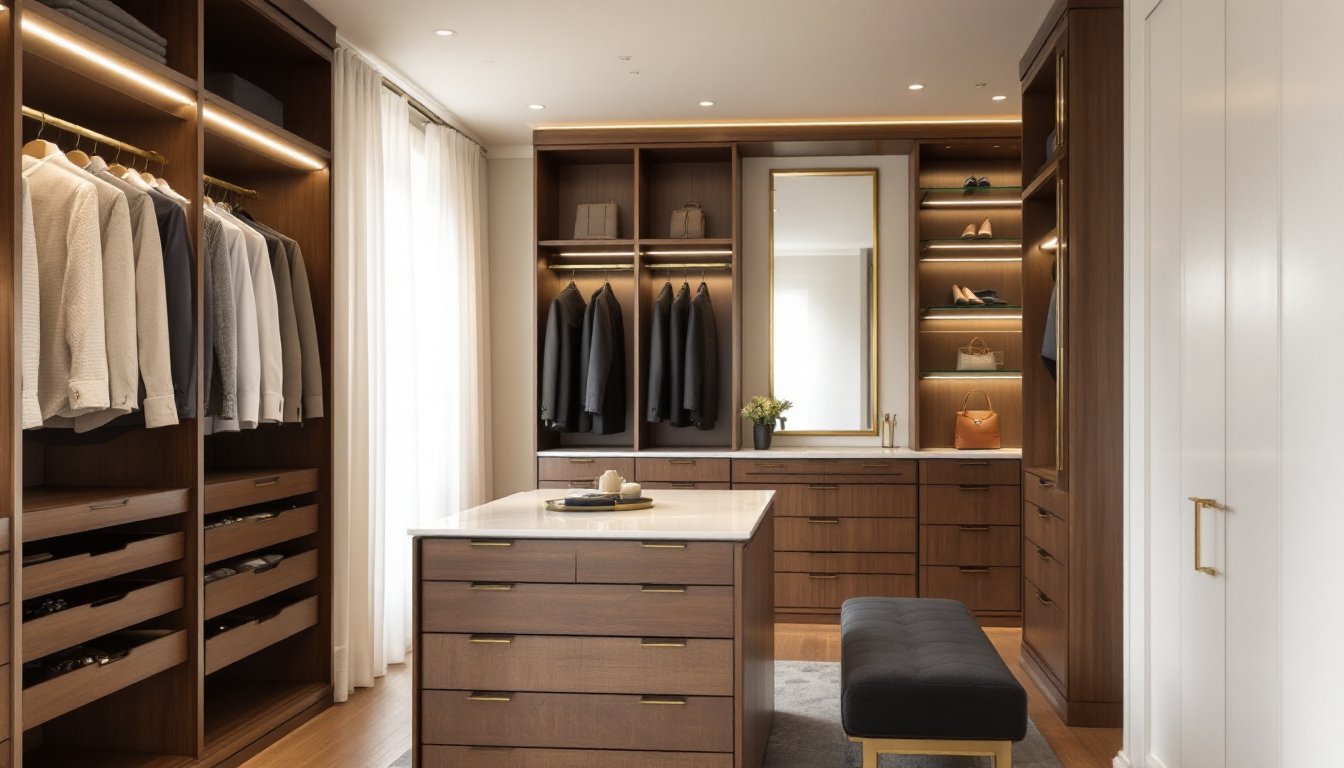
Center islands serve multiple functions: folded clothes storage, accessory display, and a surface for laying out outfits. Size matters, 4 feet by 3 feet minimum provides useful surface area without dominating the room. Include glass-top drawers for jewelry or watch collections. Ensure drawers have dividers: a single open drawer becomes a junk pile.
Open display shelving for handbags, shoes, or accessories creates visual interest. Many designers highlight boutique-style displays in high-end walk-ins, using glass shelves and backlighting for prized pieces. Install adjustable glass shelves with polished edges: ½-inch tempered glass supports most handbags safely. Use LED puck lights above each shelf to highlight items without heat buildup.
Full-length mirrors are non-negotiable. Wall-mounted mirrors save floor space, but freestanding cheval mirrors tilt for full-body viewing from multiple angles. Place mirrors opposite windows or light sources, never where they reflect directly into your eyes when dressing.
Smart Technology Integration for Modern Luxury Closets
Technology integration enhances convenience without gimmicks, if implemented thoughtfully.
Automated lighting using motion sensors eliminates fumbling for switches. Install occupancy sensors with adjustable time delays (5-10 minutes prevents lights cutting off mid-outfit change). Wire them on a separate circuit from ambient lighting so you control when automation is active.
Motorized closet rods drop down from high storage at button press, making seasonal clothing accessible without ladders. These systems require 120V outlets positioned near mounting points and add $800-1,500 installed. Practical for ceilings over 9 feet: overkill for standard heights.
Climate control protects high-end clothing and leather goods. A mini-split HVAC system maintains consistent temperature and humidity, target 68-72°F and 40-50% relative humidity. Requires exterior condenser placement and electrical work (often 240V circuit). Simpler approach: add a return vent if the closet shares space with a conditioned bedroom.
Charging stations built into islands or dressing areas keep devices powered. Install USB outlets (minimum USB-C capability) in drawer interiors or countertop pop-ups. Remember that NEC 2020 code requires GFCI protection for countertop receptacles within 6 feet of sinks if you add a hand-washing station.
Security features such as biometric locks or hidden safes protect valuables. Fireproof floor safes require concrete subfloor or significant structural work in wood-frame construction, discuss with a contractor before ordering. Wall safes fit between studs but limit capacity to 16 inches wide (stud spacing).
Many elements found in modern luxury homes now extend to closet spaces, including integrated sound systems and app-controlled lighting scenes, convenient but prioritize core functionality first.
Conclusion
Building a luxury walk-in closet means making deliberate choices about layout, storage, lighting, and materials. Focus on functional basics first, adjustable shelving, proper lighting, and quality drawer hardware, then layer in premium finishes and technology where they serve daily routines. The best closets feel personal, not like showrooms, balancing beauty with the reality of how clothes actually get stored and retrieved.